
If your home pizza dough tastes bland or tears easily, this pizza dough deep dive is for you. Here is how iterating with Gemini gave me the perfect pizza dough recipe.
We’ve all been there: you’re stretching out your homemade pizza dough, visualizing a nice, pillowy, wood-fired crust. Then, reality hits, and your dough either snaps back like a rubber band or stubbornly refuses to hold its shape.
Worst of all, you pull a little too hard, rip a hole right in the dough during shaping, and realize you have to patch it up. If you’ve ever fought with a stubborn disk of dough or wondered why your home recipe doesn't behave like an artisan pizzeria, you are not alone.
The History: Our Baseline and Challenges
For years, my husband and I used King Arthur Flour dough as our pizza night staple. It was the best dough we had found, but we still accepted frustrating roadblocks as part of the process.
When our dough wouldn't stretch properly and ripped, we blamed the temperature, assuming the counter environment wasn’t warm enough for the yeast. We patched holes when stretching as we went, but those quick fix lowered the structural integrity of the dough, preventing it from holding gas evenly in the oven.
The Shift: Chasing Flavor and Testing Assumptions
The real turning point, and why I kickstarted this pizza dough development journey again, was because I felt like the dough was missing independent flavor or seasoning. However, knowing ratios are so important for yeast-based items, I didn’t want to just randomly change ingredient amounts without knowing the impact.
Instead of guessing, I used Gemini to troubleshoot the science so I wouldn't ruin dinner. My first prompt focused strictly on flavor as an isolated ingredient, leading to Dough Formulation #1.
While the taste was deep and the texture was good, we quickly realized the crust wasn’t puffy enough. I went back to the AI, shifted my approach, and asked for a puffy crust and high hydration.
This instantly unlocked Dough Formulation #2. After just one bite, my husband said, "This is the one."
The Breakdown: Connecting the Hidden Variables
Working through these iterations with AI helped me realize that our old recipes left us completely in the dark about how ingredients actually interact. To understand how these pieces fit together, think of pizza dough like filling a balloon inside a small cardboard box.
The balloon is the gas produced by the yeast, and the cardboard box is the gluten structure (the stretchy protein web) holding it in. By adjusting our communication with Gemini, I was better able to understand these variables:
- The Flour Variable: Our old baseline flour didn't give us the specific gluten elasticity needed for an ultra-thin stretch, which is why it constantly broke during shaping.
- In our analogy: If the cardboard box is made of cheap, thin paper, the expanding balloon will burst right through the walls the moment it experiences any pressure.
- The Hydration Variable: To get a light, authentic Neapolitan crust, you need high hydration (a high ratio of water to flour) because that extra water turns into instant steam in a hot oven, lifting the dough into a fluffy rim.
- In our analogy: Water acts like the steam engine inside the box; if you don't add enough water, there won't be enough pressure to push the balloon out to fill the corners of the box.
- The Yeast Variable: The exact quantity of yeast dictates your entire fermentation timeline. If you use too much yeast for a long rest, it eats all its fuel too early and leaves your dough completely deflated by the afternoon.
- In our analogy: If the balloon expands too fast and pops before you even put it in the cardboard box, the box will completely collapse and bake up flat.
The Action: Choose Your Pizza Journey
To fix these issues at home, you don't need to guess. You just need to match your recipe timeline, yeast quantity, and flour choice to your specific oven setup.
Oven temperature matters because high-heat ovens (425°C / 800°F+) flash-bake dough in 90 seconds, requiring high moisture to prevent burning, while home ovens (260°C / 500°F) bake slower and need oil or lower hydration to get crisp without turning into cardboard.
Here is a simple breakdown of how our tested formulas stack up against each other.
The Pizza Dough Selection Matrix
Once you have picked a dough you want to try, find the recipe link at the bottom of this article!
|
Dough Recipe |
Key Characteristics |
Yeast Quantity |
Best Baked In |
When to Choose This Dough |
|---|---|---|---|---|
|
The King Arthur Staple |
Moderate hydration, uses olive oil. Decent stretch but can tear if using AP flour instead of bread flour. |
4.0g (Same-day) or 0.5g (Overnight) |
Home Oven or High-Heat Oven |
A reasonable, highly versatile option for both home and high-heat setups when you want a reliable, middle-ground crust. |
|
A’s Neapolitan-Esque Dough |
Low-to-moderate hydration, zero oil. Offers great deep flavor and texture, but yields a slightly flatter profile. |
4.0g (Fast 2 to 5-hour same-day rise) |
High-Heat Pizza Oven (Can try in Home Oven) |
Best for high temperatures where you want an oil-free, authentic char. Because of its lower hydration, it will also support fully baking through in a home oven without getting soggy. |
|
A’s Puffy Neopolitan Dough |
High hydration, '00'/bread flour blend, zero oil. Maximizes steam for a light, airy rim. |
4.0g for same day use, or 0.5g (Slow 24-hour cold ferment) |
High-Heat Pizza Oven (Can try in Home Oven) |
Designed for high-heat ovens to explode the crust rim with steam. Slower home ovens struggle to evaporate this high moisture quickly enough, which can result in a gummy interior, though you can still experiment with it. |
The Inspiration: Two Custom Topping Combos to Try
Once you unlock the perfect dough structure, experimenting with toppings gets a lot more fun! Here are two unique combinations we built to complement our bakes:
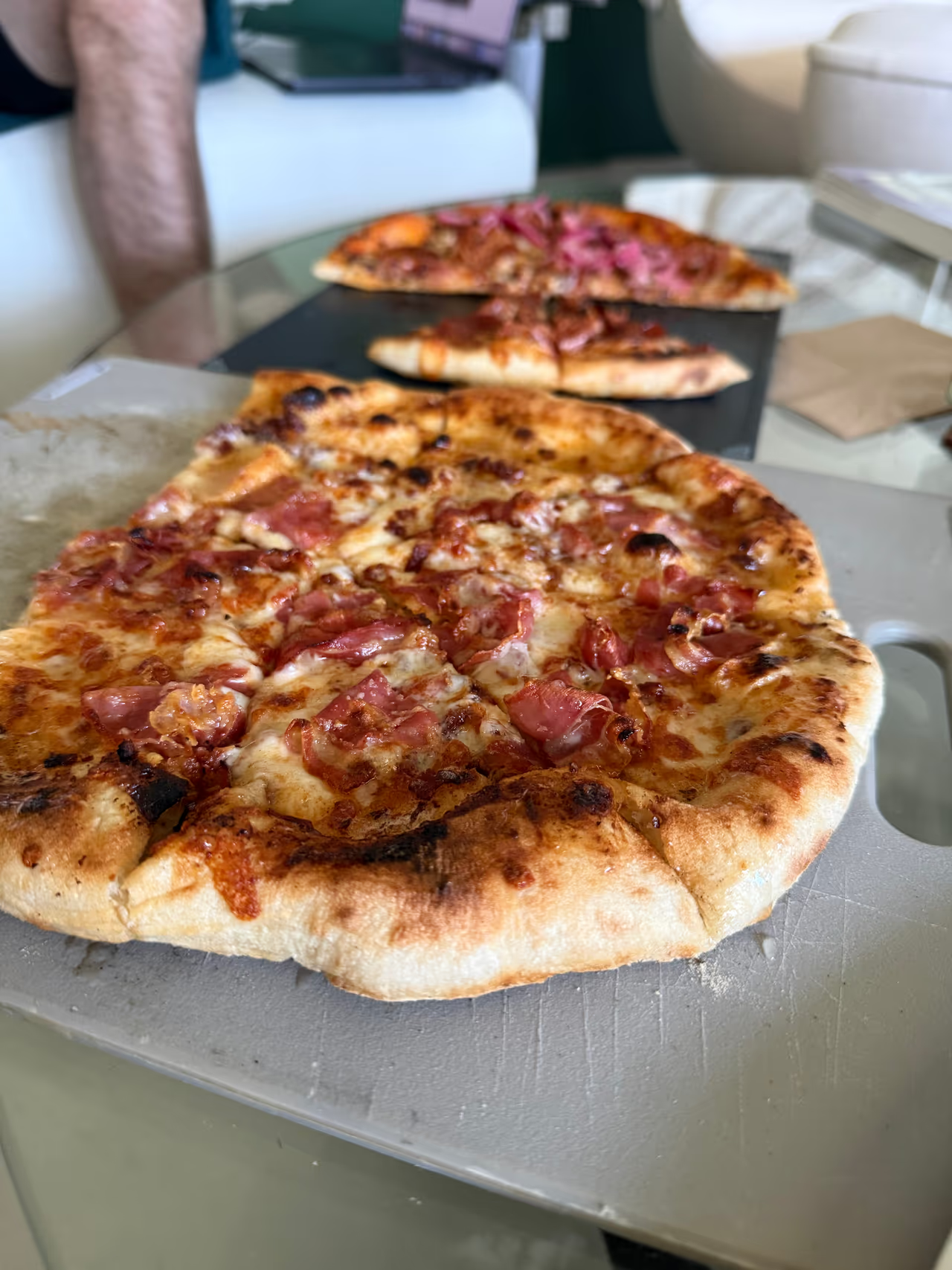
1. The Spicy Prosciutto
This combination started as a total experiment based on whatever we had left over in the fridge, and it quickly became a favorite of mine. The base sauce is inspired by Panago’s jalapeno ranch dip, topped with a rich mix of premium, savory meats.
|
|---|
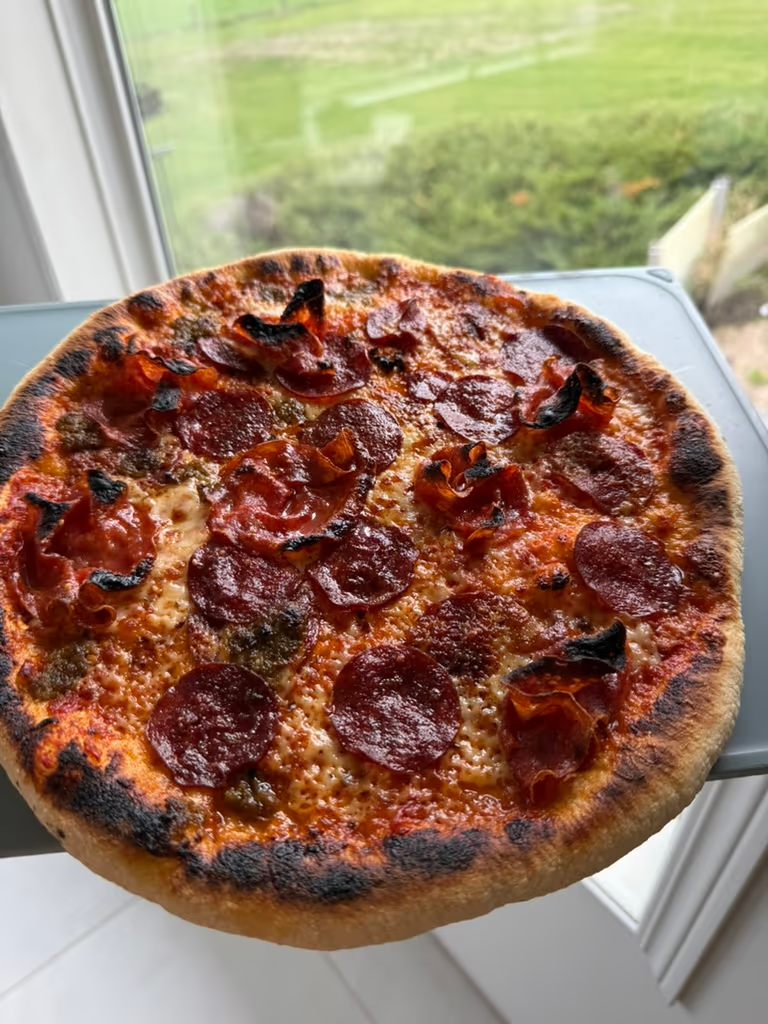
2. The Spicy Double-Meat Rosso
The second pizza that we really liked was a red-sauce classic with a distinct, smoky kick. It features a great combination of standard pizza toppings elevated by some specialty charcuterie and spices.
|
|---|
The Wrap-Up
In theory, pizza dough is simple, requiring only a handful of basic ingredients. However, understanding how each component plays its own vital piece of the puzzle is what connects the dots to create the exact pizza you want.
Give these three different approaches a try—while they might feel fairly similar on the counter, managing your hydration, flour, and yeast levels will completely change how your dough behaves.
|
King Arthur Flour: Previous staple pizza dough recipe |
|---|
Comments
No comments yet. Be the first to share your thoughts!