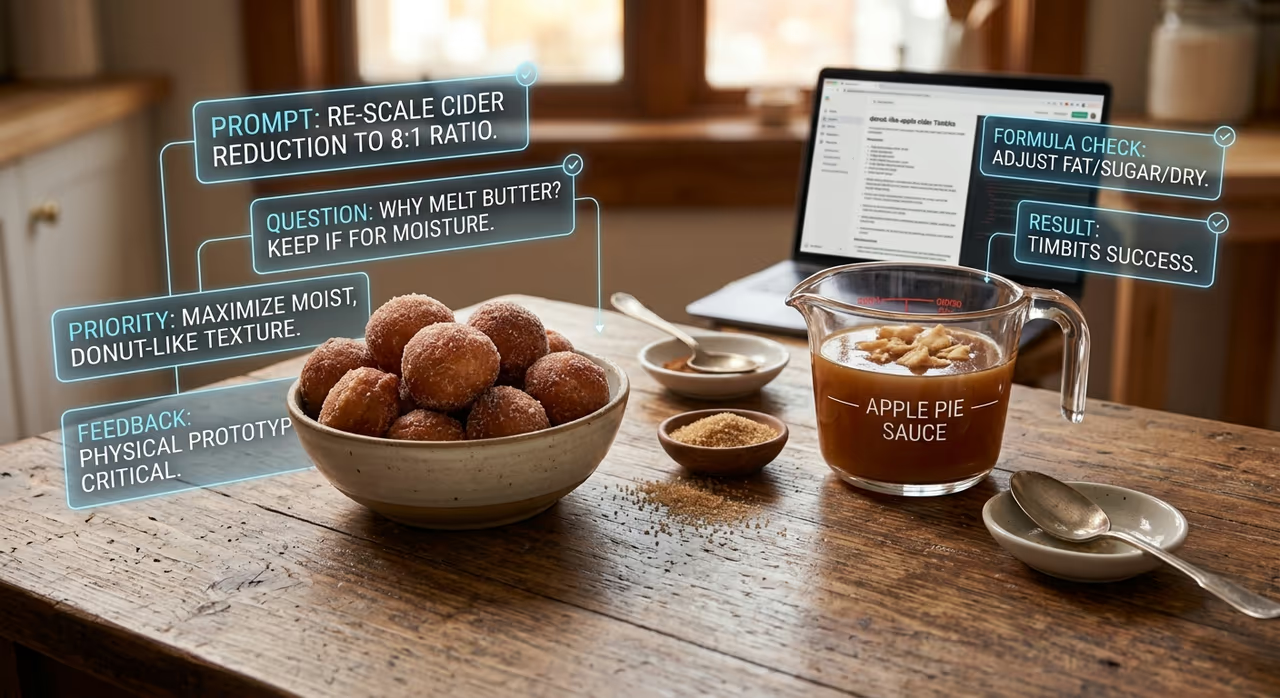

I usually avoid scones because they’re dry and disappointing. By using an AI strategy I call “persona layering," I built a digital team of expert bakers to debate their way to an incredible scone recipe.
Have you ever sat in front of a gorgeous tier of afternoon tea pastries—like the iconic spread in the mountains at Fairmont Lake Louise—and wondered how they get their scones so soft? For years, my family has kept a beautiful tradition of celebrating birthdays, Mother's Day, and even my own engagement over afternoon tea.
But I have a confession: I am incredibly picky about scones. Which means I usually avoid them - even at the Fairmont. Too many of them turn out dry and dense, leaving you reaching for your cup to swallow a single crumbly bite.
I finally decided it was time to create a melt-in-your-mouth scone of my own - inspired by the scones at the Fairmont with clotted cream and fancy jam. I actually wanted to make a rhubarb scone recipe, so that’s what I initially set out to do.
I knew I wanted to use AI because I have little experience with scones but a strong goal. This is the perfect scenario in which you can use AI because you’d be tapping into its expertise and knowledge base. So I turned to Gemini to crack the code using a powerful prompting strategy called persona layering.
The Shift: What is Persona Layering?
Most people use AI as a basic search engine or for simple, everyday tasks. You might ask it to draft a quick email or summarize a dense PDF, and it does a perfectly fine job.
But leveling up the conversation can take you to incredibly interesting places and help you find deeper insights than you would have ever found otherwise. That is where what I call persona layering comes in, which means stacking multiple, distinct viewpoints inside a single conversation.
Think of it like assembling a team of expert bakers from around the globe right in your digital kitchen. Instead of just asking for a standard recipe, you instruct the AI to view your project through different expert lenses to catch flaws and optimize the details.
Remember, you’re always in the driving seat. As you review the different perspectives, you need to decide what your priorities are for the final outcome and the specific item you want to make. For me, the ultimate guiding principle was a melt-in-your-mouth scone, which meant I was reinforcing that exact goal over and over again across multiple personas.
By building this virtual dream team and keeping your core objective at the center, you can pressure-test an idea from multiple angles before you ever turn on your oven - protecting your time, effort, and ingredients.
The Breakdown: Stacking the Boardroom
To engineer that luxury hotel scone texture, I didn't just ask for a generic baking list. I systematically introduced four different personas to debate, critique, and refine the formula.
Here are the exact prompts I used to build my digital boardroom of baking experts:
Prompt with Persona 1 (The Previous Fairmont Baker): “You are an extremely experienced professional private patisserie Baker. You used to work at the Fairmont hotels and you helped with their afternoon tea recipes for bites. One thing that was your favorite to make was the scones. They were soft almost melted your mouth and were not dry like tacky you created a recipe to make them at home particularly chocolate chip scones what’s the recipe?"
This initial prompt gave me a fantastic baseline recipe, but excellent AI generated content requires a “Human-in-the-Loop” step. I noticed the recipe called for cold butter, which triggered a hesitation based on my own baking knowledge—I always thought authentic English scones relied on room-temperature butter.
When I challenged the model on this, the AI explained that while room-temperature butter creates a traditional, tight, cake-like British crumb, the Fairmont standard fuses British tradition with French patisserie technique. Cold butter leaves tiny pockets of fat intact in the dough, creating a burst of steam in a hot oven that lifts the scone from the inside out so it stays ultra-soft.
To pressure-test this further, I layered on a completely new persona to act as a ruthless critic.
Prompt with Persona 2 (The French Patisserie Expert): "Now your job is to be a French patisserie expert. You need to find flaws and other people’s recipes in order to achieve your client goals who hired youB your job right now is to find the most melt in your mouth scones. Review the recipe and make sure that the client can make it at home."
The elite French pastry expert identified three critical flaws ruining the melt-in-your-mouth texture:
- Flour Chemistry: Standard All-Purpose flour builds too much gluten tension. The Correction: Cut it with cornstarch to lower the protein and soften the crumb.
- The Moisture Trap: Grating frozen butter is a bad shortcut because the thin strands melt too quickly. The Correction: Use precise 4mm cold cubes to create an insulated fat barrier.
- Sugar Crystallization: Granulated sugar draws moisture out, creating a crunchy shell. The Correction: Use powdered sugar so it dissolves instantly for an ultra-fine texture.
To round out the experiment, I uploaded a battle-tested King Arthur Flour scone recipe that I have had saved for a long time and forced a direct, competitive showdown.
Prompt with Persona 3 (The Competitor): "Now you need to be someone who has made the King Arthur flour one many times. Debate"
The King Arthur baker argued that a cream-only recipe actually wins the ultimate softness challenge:
- No Solid Fat: Dropping butter cubes for liquid-bound dairy fat means the dough expands uniformly like a cloud instead of creating chewy, flaky layers.
- Maximum Hydration: Pushing cream to a 94% hydration limit creates a massive moisture reservoir that completely defeats oven dryness.
- No Egg Whites: Egg whites add albumin, which creates structural bounce and coarsens the crumb rather than letting it melt like velvet.
Finally, I brought our original anchor persona back into the room to deliver the ultimate, consolidated execution plan.
Prompt with Persona 4 (The Ultimate Formula): "Now be the Fairmont chef again. The clients goal is melt in your mouth with some rise. Not dry crumbly."
The Fairmont chef closed the debate by exposing King Arthur's fatal flaw: it turns into a flat, greasy, structural disaster ("wet-crumble") that falls apart when split open. To achieve a proud patisserie rise and a dissolving texture, you need both worlds. By balancing egg white for wall structure, egg yolk for tenderness, and introducing a strict 45-minute hydration chill, the ingredients work in harmony to shoot straight up in the oven while remaining velvety-soft on the tongue.
By having these characters evaluate each other’s recipes and concepts, the AI generated a highly specialized, foolproof baking strategy. Not only did I learn a bit about each one’s priorities, but I felt pretty confident getting started on the recipe.
The Verdict: I Was Mind Blown
I have to be honest: I had medium hopes for this recipe. I was hoping it would turn out good, but I was totally prepared for it to fail, and that would have been okay.
I don't have any actual experience making scones from scratch. I simply took a shot in the dark, using my broader baking experience and knowledge to back-check the AI as it built the recipe, using the personas I designed to help guide the way.
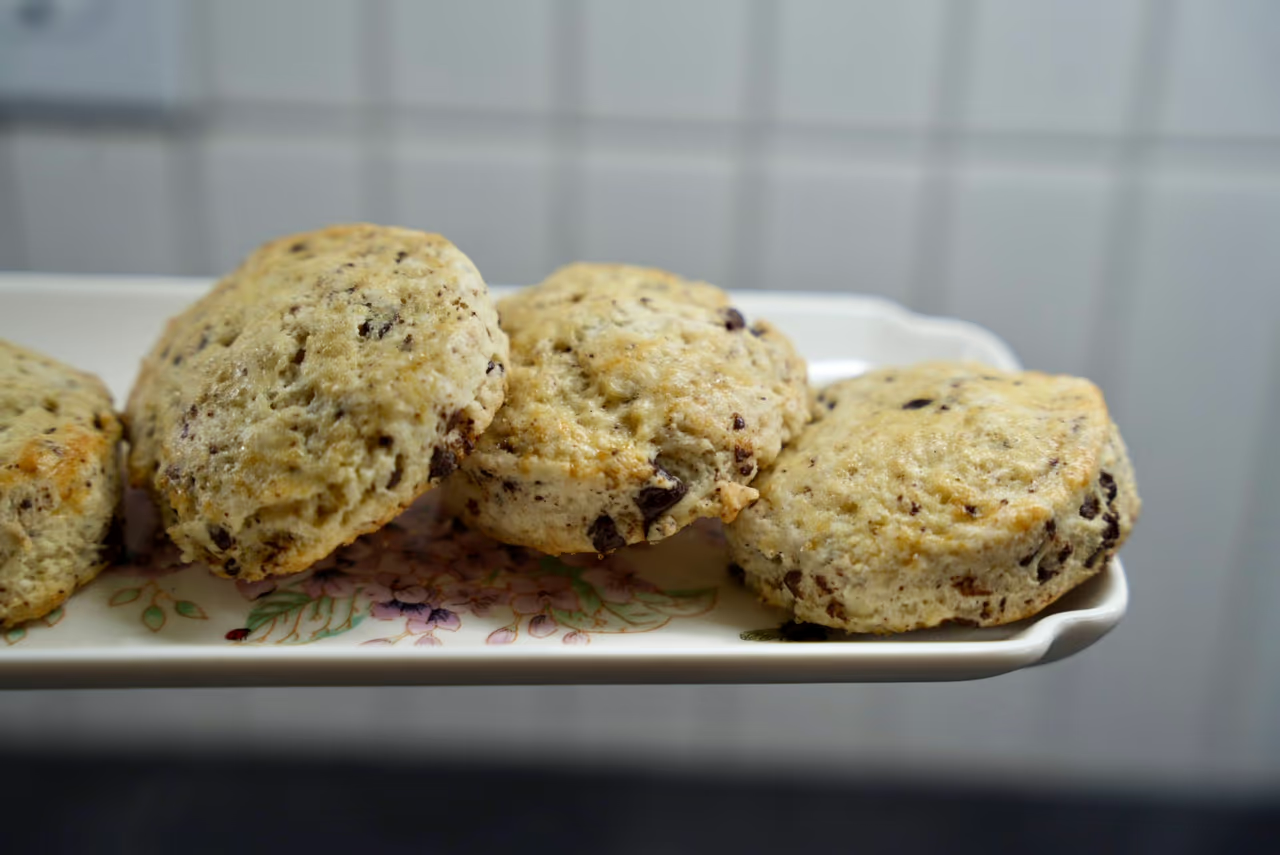
Here is a statement I completely didn't think I would say today: this will now be a staple recipe for me. And for me, that’s saying something! This recipe was so soft, melt in your mouth, but a pinch of outer texture.
If you want to try this out yourself, here are my non-negotiable rules for success:
- If you can't let the dough hydrate in the fridge overnight, do at least 1.5 hours to ensure the flour fully absorbs the liquid.
- Most importantly: buy good quality chocolate so it bakes beautifully into those layers.
Persona Wrap Up
Engineering the perfect scone didn't happen by accident; it happened because I refused to accept a basic, single-layer answer from a prompt and refused to try a generic scone recipe on the internet.
You can apply this exact multi-persona vetting process to almost any project you are working on, from marketing copy to software design.
Build your own team of virtual experts, layer your personas, and let them debate their way to perfection.
Lastly, bake these now before the summer heat comes and kitchen temperatures make working with cold butter impossible!
Comments
No comments yet. Be the first to share your thoughts!