From a failed brunch plan to a tempering win. Here’s my last-minute pivot for achievable at-home chocolate covered strawberries.
Mother’s Day was approaching and I had vague official brunch plans. I was ideating, but the morning of, I realized my plan for Eggs Benny on cornbread waffles was dead because I was short on cornmeal. Whomp.
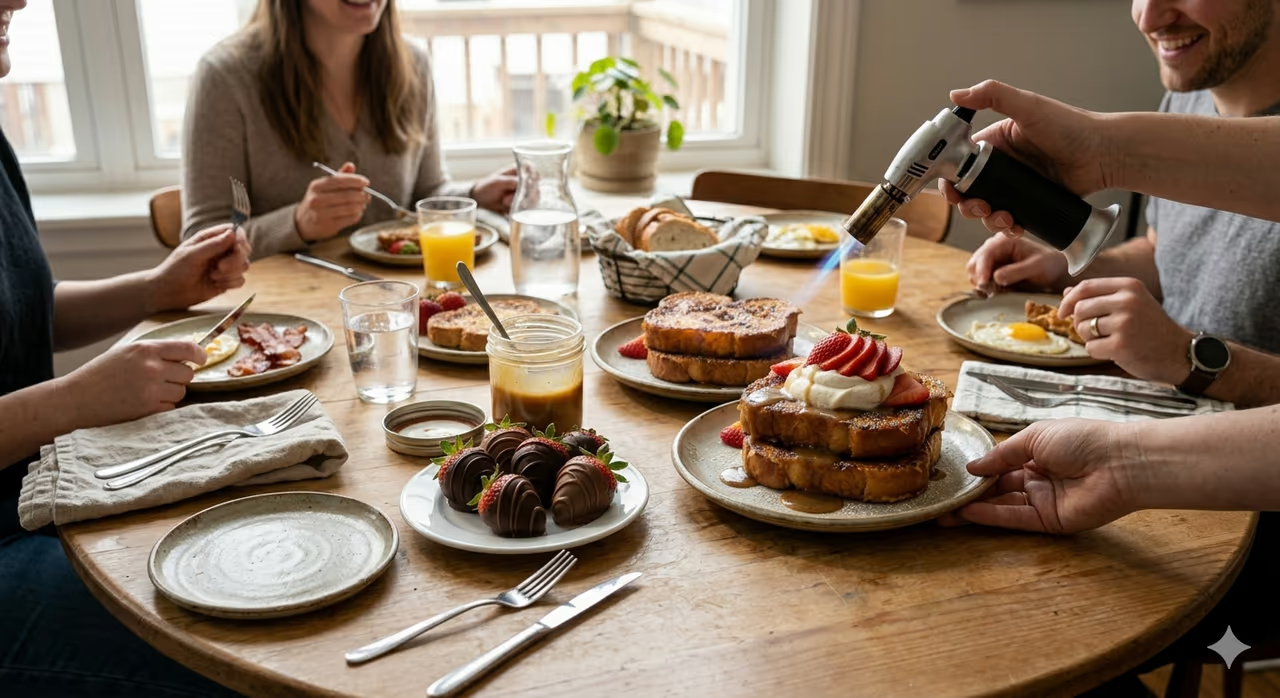
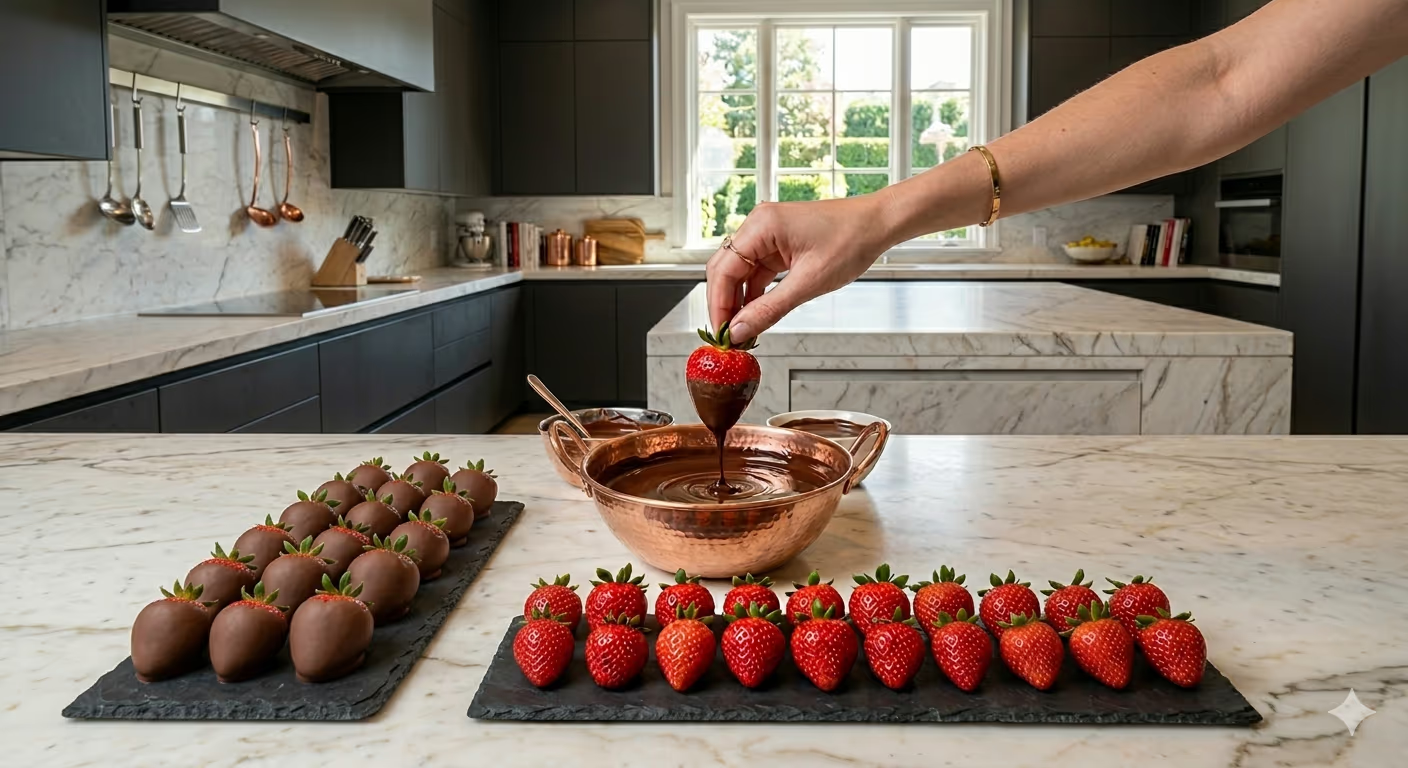
I pivoted to Brûléed Cinnamon Swirl French Toast, but I wanted a "hero" element to level up the spread for my mom. I landed on hand-dipped chocolate-covered strawberries—a high-reward move, but one that filled me with immediate hesitation.
I was acutely aware that tempering is a high-stakes technique where there is no middle ground: you either achieve the science with a snap of the chocolate or you fail the presentation with wet chocolate.
The Technical Wall: The Skill Gap
Tempering chocolate is notoriously hard—my husband has done it before, but I haven't. I was well aware that this is a fickle process to hit precise crystal stages. Attempting this for the first time—during a high-pressure holiday pivot with no thermometer—felt like a recipe for disaster.
So I wanted a simple, foolproof microwave method because I already trust microwave options (it’s the only way I make lemon curd), but I didn't have any. And I didn't have time to look any up so I turned to Gemini.
The AI Pivot
Developing this process was an involved process on it's own; it was a layered AI journey rather than a "one-and-done" prompt experience. I used Gemini to build a "one action per step" plan, but I had to push back on the initial results a few times because they weren't descriptive enough for a technique this unforgiving.
Ambiguity is how recipes fail. If you were a fly on the wall, you would have seen this while I conversed with Gemini:
- Challenging the Timing Logic: I questioned the core physics: if I have to wait 5 minutes for a test spoon to mattify, won't the bulk bowl cool down too much to actually continue dipping?
- Engineering the 2-Second Rule: That friction surfaced the specific fix—using ultra-short, 2-second microwave intervals to maintain fluidity. This allows you to keep the chocolate workable without providing enough heat to break the temper.
- The Diagnostic Check: I refined the plan to include specific visual cues for Callebaut callets, ensuring I knew exactly what a "pass" looked like in real-time for a successful temper.
This iterative "pre-flight" debate turned a vague recipe into a specific, detailed framework I actually trusted before the first melt began.
The Execution
II quickly realized that even with clear instructions, the experience is a moving target. Some of the most critical thoughts and discussions happened on the fly as my understanding of the chocolate's behavior evolved in real-time.
When my test spoon showed NO difference in sheen after 2 minutes, I didn't just guess—I simply told Gemini exactly what I did and described what I was looking at. By being descriptive about how the chocolate looked and felt in comparison to the instructions, we troubleshooted right there to get the tempering back on track.
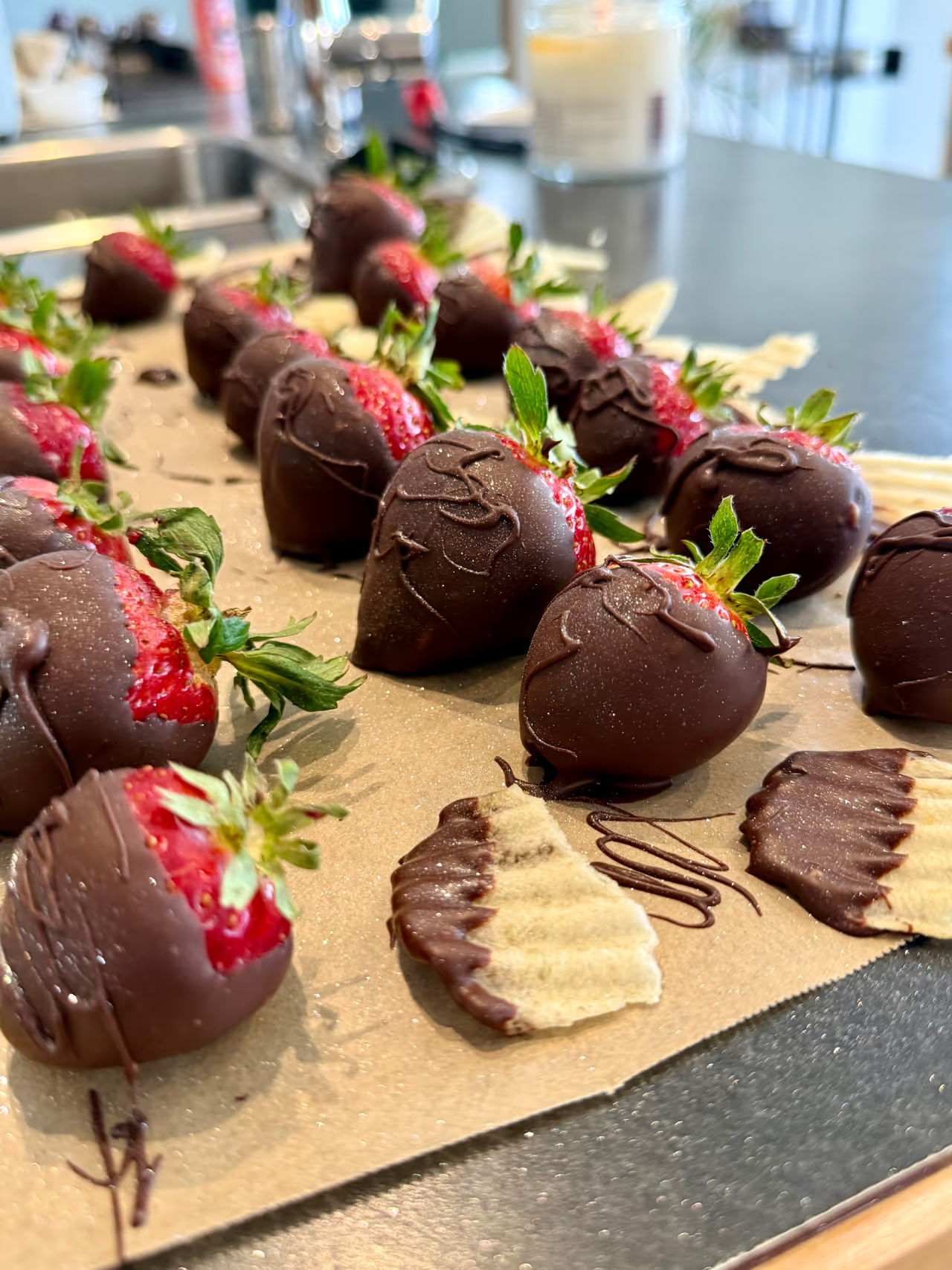
I adjusted on the fly, got that satin sheen, and ended up with a perfect, professional snap. It was a live evolution of skill that turned a potential flop into a successful Mother's Day project.
The Final Result: A Professional Win
Achieving a perfect snap and satin sheen on my first attempt—during a high-stakes holiday pivot, no less—felt like a massive win. I’ve tackled some pretty complex "flavor engineering" projects in my kitchen before, but there is a unique satisfaction in completing a notoriously fickle technique like tempering without the safety net of a thermometer. It turned what could have been a "cornmeal crisis" into a highlight for the table. If I can do it, you can too!
The Meta-Lesson: How to Actually Use AI
This project was a perfect case study in how to treat AI as a collaborator rather than just a search engine. If you're using it to level up your own skills, remember these three things:
- It’s not a "one-and-done" experience: The best results come from a back-and-forth. My experience was only successful because I pushed back on the initial suggestions until the logic held up.
- AI doesn't always get it right: You have to be the lead scientist. If a step feels impractical—like waiting so long for a test spoon that your bowl seizes up—speak up. Challenging those friction points is how you get to a win.
- Pivot in real-time: When the experience starts evolving and the chocolate doesn't look like the "manual" says it should, use the AI as a coach. By clearly describing the look and feel of what was happening in my bowl, I was able to troubleshoot the temper back on track right when it mattered most.
The bottom line? AI is a great tool for partnering with your ambition, but the win still comes from your own willingness to iterate, describe what you're seeing, and drive the process home.
Note: Some images have been created with genAI - because well, this is a genAI food blog.
Comments
No comments yet. Be the first to share your thoughts!