
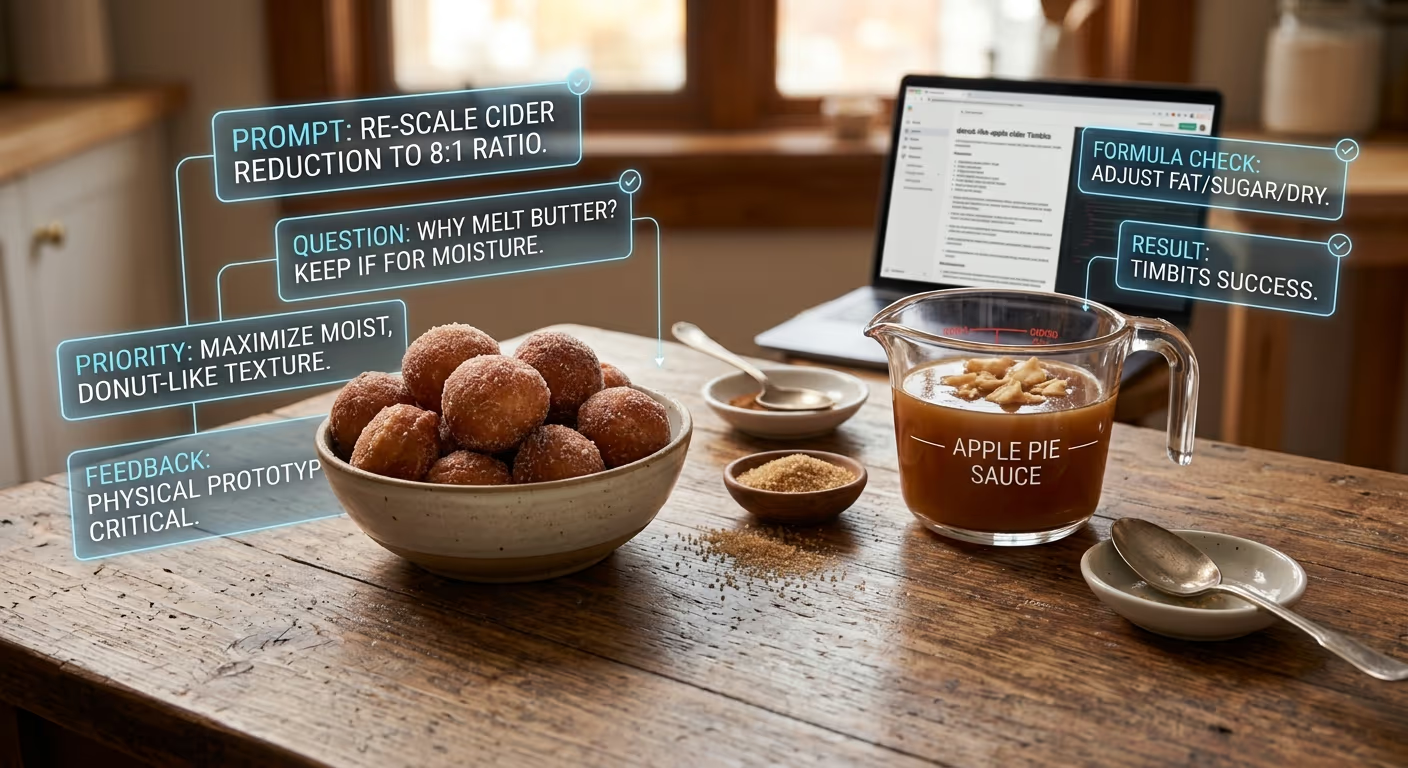
How reducing apple cider gave me two fall recipes, and why I built them with Claude instead of searching for them.
When the mornings get cool and the first leaves start turning yellow, my brain goes two places. One: it's time to pull the decor pumpkins out of storage. Two: I start hunting for cozy fall recipes that are actually worth making.
That second one is where I get stuck. The search turns up plenty of options — diced apple in a cake, diced apple in a muffin. They're fine. They're classics for a reason. But fall only comes around once a year, and I want a recipe that makes me genuinely excited to pull out the mixing bowl. Something I'll want to make again next September, and the one after that. Those are harder to find than they should be.
This year the itch was specific. As the weather turned, I was already thinking about the holidays, and my brain went straight to fun seasonal latte drinks. I have a solid lineup for Christmas — nothing for fall. So I got curious: could I build one?
The Shift: Borrowing a Technique I Already Trusted
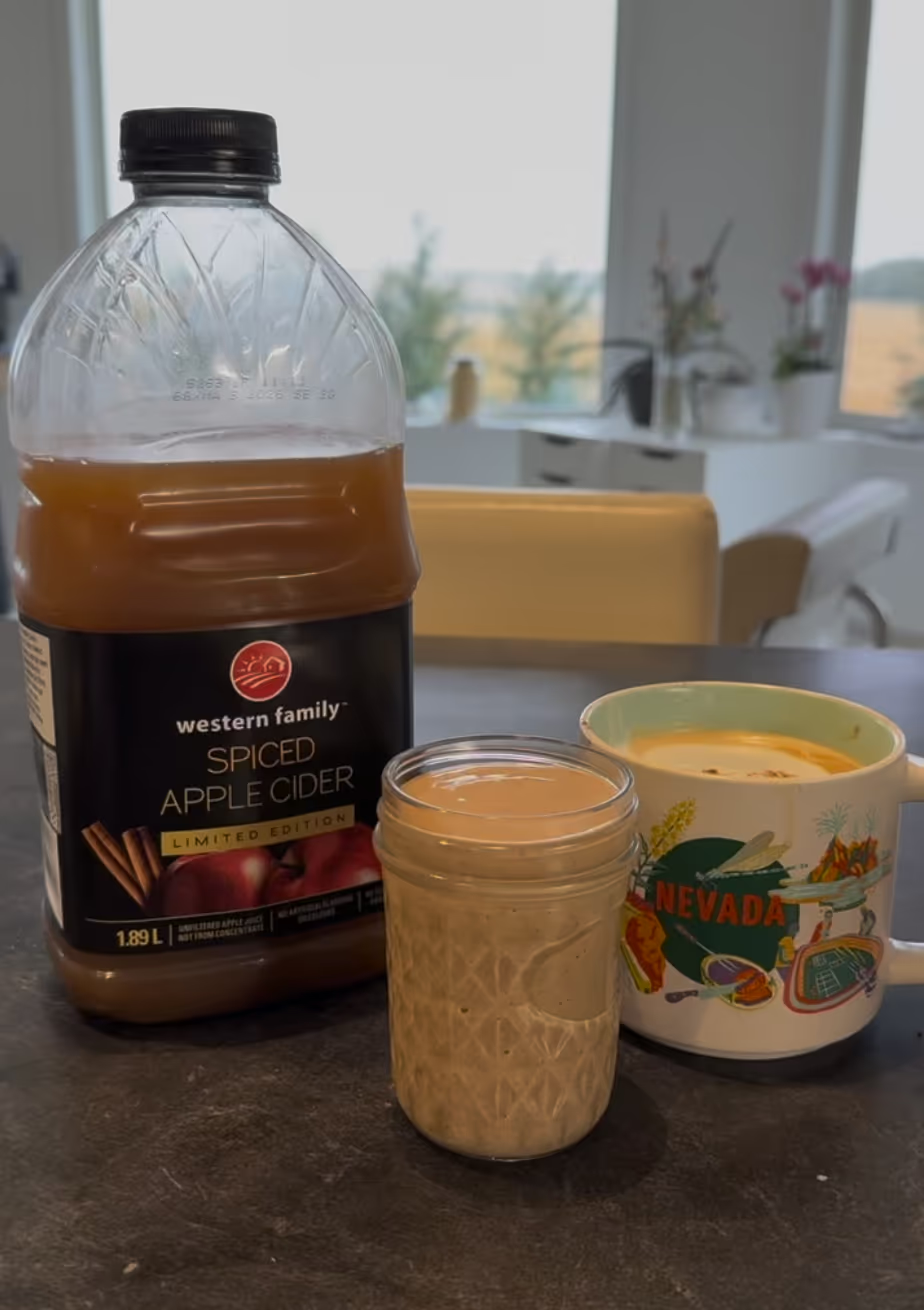
I make an apple pie homemade caramel most years around Thanksgiving in October. The step that makes it work is reducing apple cider from a thin liquid down into a syrup before it ever touches the caramel base. That reduction is where the flavor lives.
Meanwhile, sweetened condensed milk is the base I reach for on almost all of my holiday latte sauces. It's the thing I already know how to build on.
So the idea landed on its own: take the reduced cider and pair it with the condensed milk base. Two things I trust separately, doing something new together.
Knowing the idea was the easy part. What I didn't know was the how — how much reduced cider to how much condensed milk, and where the apple pie seasoning fit without turning things muddy. Cider reduces down a long way, and I only had so much of it, so I didn't want to start cooking without a sense of how much reduction I'd actually need to end up with.
That's where I brought in Claude, to work through those details with me and pressure-test the proportions before I made anything.
A quick aside on the tool switch. If you've been following along, you may have noticed I've moved from Gemini to Claude. It's good practice to try different tools and see how they work with you — you might be surprised how similar and how different they are at the same time. When I first switched to Claude, I didn't love the experience. But sticking it out a bit longer, I can see more clearly how to adjust my prompts to get real value back.
The Result: Apple Pie Latte Sauce
A handful of ingredients, a blender, and we landed it: sweetened condensed milk, reduced apple cider, apple pie seasoning.
The real target was flavor strength. Espresso is loud, and it flattens anything delicate you stir into it — a sauce that tastes great off the spoon can disappear entirely once it hits a shot. The reduced cider is what solves that. Cooking it down concentrates the apple to the point where it still reads clearly through the espresso instead of getting buried. Something you'd order off a menu board at a shop like Starbucks, but better, because you made it.
This is my first fall creation of the year and I'm genuinely excited to put it in your hands. If you have people coming over for Thanksgiving in a few weeks, make this a couple of days ahead. I use it in lattes, but steamed milk and a spoonful of this makes an apple pie steamer that's just as good.
Round Two: What to Do With the Leftover Cider
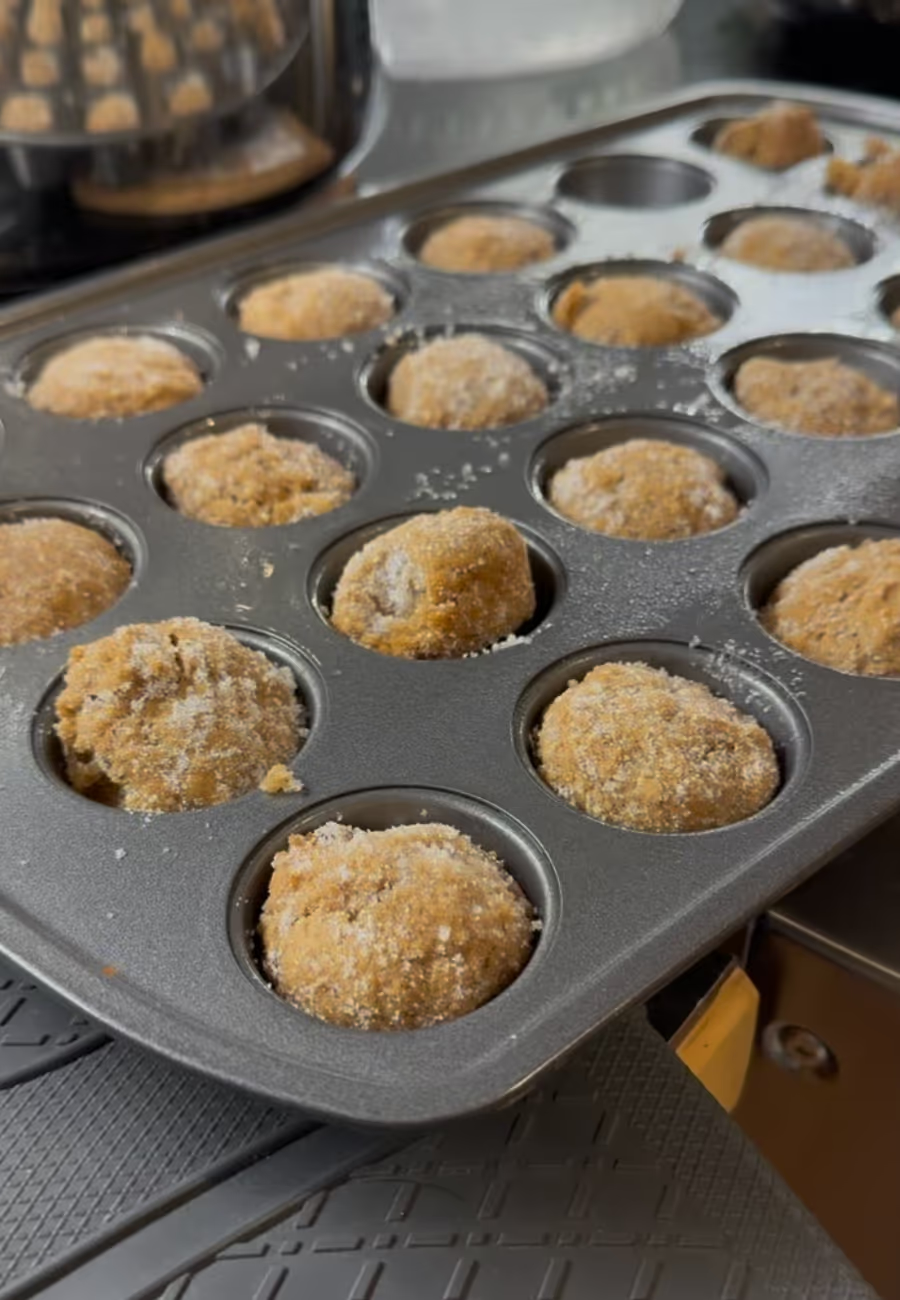
I had apple cider left over after the sauce, and I wanted to put it toward something baked — a fall recipe with real apple flavor running through it, something cake-like you'd eat with coffee rather than drink alongside it. Cake was the direction, but what I was actually picturing was Timbits, the Tim Hortons kind. Apple cider donut Timbits.
So I went the same route: reduce the cider down to a syrup first, then build the recipe around it.
I partnered with Claude on this one for a specific reason. There are hundreds of recipes online that look incredible — but I know my kitchen and its quirks, I know what ingredients I actually have, and I know what I want the outcome to taste like. Working through it in conversation meant I could hand over all of that context and build for my scenario instead of hoping someone else's recipe translated.
My two priorities going in:
- Not too sweet. These were for a specific group of people, and I wanted the cake itself restrained enough that the sugar coating on the outside balanced it rather than stacked on top of it.
- Punchy apple flavor. This is the one you can't read off a recipe card. An ingredient list doesn't tell you what that apple-to-everything-else ratio will actually taste like once it's baked.
Both of those are things I could say out loud at the start and work through as I went, instead of committing to a batch and hoping.
Prompts That Did Real Work
Remember: when you're in a conversation with a GenAI tool like Claude, you need a clear goal to shape it and get something of value back. Let's look closer at a few prompts I used and the impact they had on steering the conversation toward my vision for this recipe.
|
"2 cups of apple cider reduced to half a cup is not that concentrated." |
The value here was checking the math against the claim. The recipe said the reduction was the flavor engine, but a 4:1 reduction doesn't deliver that. Saying so out loud moved it to 8:1, then 6:1 — and because the reduction is the backbone, every other ingredient had to shift with it. One sentence, and the whole formula changed. |
|---|---|
|
"Why do we need to melt the butter here instead of creaming it?" |
Asking why instead of demanding a change is what made this useful. If I'd just said "cream it," I'd have gotten the swap with no explanation. The question got me the reasoning behind melted butter, and with that in hand I kept it on purpose instead of going along with a step I didn't understand. |
|
"Review this from a professional baking perspective. Priorities were moist, not too sweet. This is for breakfast. It's a donut-like cake." |
Fifteen rounds of small fixes had quietly pulled the recipe away from moist and away from donut-like, and no single change was obviously wrong along the way. Saying my priorities out loud again is what made that visible — and it's why I'd tell anyone to re-state their goal partway through a long conversation. |
|
"You built the recipe — why didn't you check the fat, sugar, and dry ingredient ratios?" |
This forced a step back to look at the whole recipe instead of the last thing we changed. Every fix had been made one at a time, in isolation, which is exactly how fat climbs to 47% without anyone noticing. Asking for a look at the full formula caught what a dozen smaller reviews had missed. |
|
"That was a terrible experience. The hot Timbits got tossed in butter and sugar and ended up crushed and smooshed." |
Real-kitchen feedback is information no amount of reviewing on screen can produce. The instruction looked fine written down and fell apart the moment I had hot Timbits in my hands. Reporting what actually happened, not what I thought might happen, is what got it fixed. |
While it is great to see what actually was part of a real conversation with Claude, the theme coming through the prompts is: I kept returning to my original goals when the recipe drifted. That's what took it from a plausible recipe to the one I actually wanted to keep.
The Wrap-Up
These Timbits got raving reviews from the family and friends who tried them. Now I'm thinking about how to turn them into something a bit more special for a holiday like Thanksgiving, coming up in October.
Two recipes, one reduction, and a fall lineup I'm actually excited about. Give them a go and see how they work out in your kitchen.
Comments
No comments yet. Be the first to share your thoughts!