
Ever wonder why your AI outputs are technically correct but still miss the mark? Here is the exact moment a spoonful of homemade dessert revealed why my prompts were hitting a wall—and how to fix yours before you hit send.
Hot days are coming, which means it’s time to dial in a reliable strawberry ice cream. I’ve had my mint chip base running flawlessly lately and with adaptations, so I decided to put my head together with Gemini to adjust the formula for fruit.
Water is a component closely calculated when making ice cream and manipulating this level helps achieve the texture you want. Because I was working with frozen strawberries, it meant increased water content compared to the mint chip recipe I was using. This meant the recipe needed to be adjusted to factor that in.
But by how much and which ingredients? This is why I asked Gemini to adjust the recipe - it has more knowledge than I do to manipulate the ratio of ingredients for a specific outcome. Gemini was a smart option to account for and recalculate the recipe for the increased water from the berries.
The Recipe Was Successful, But...
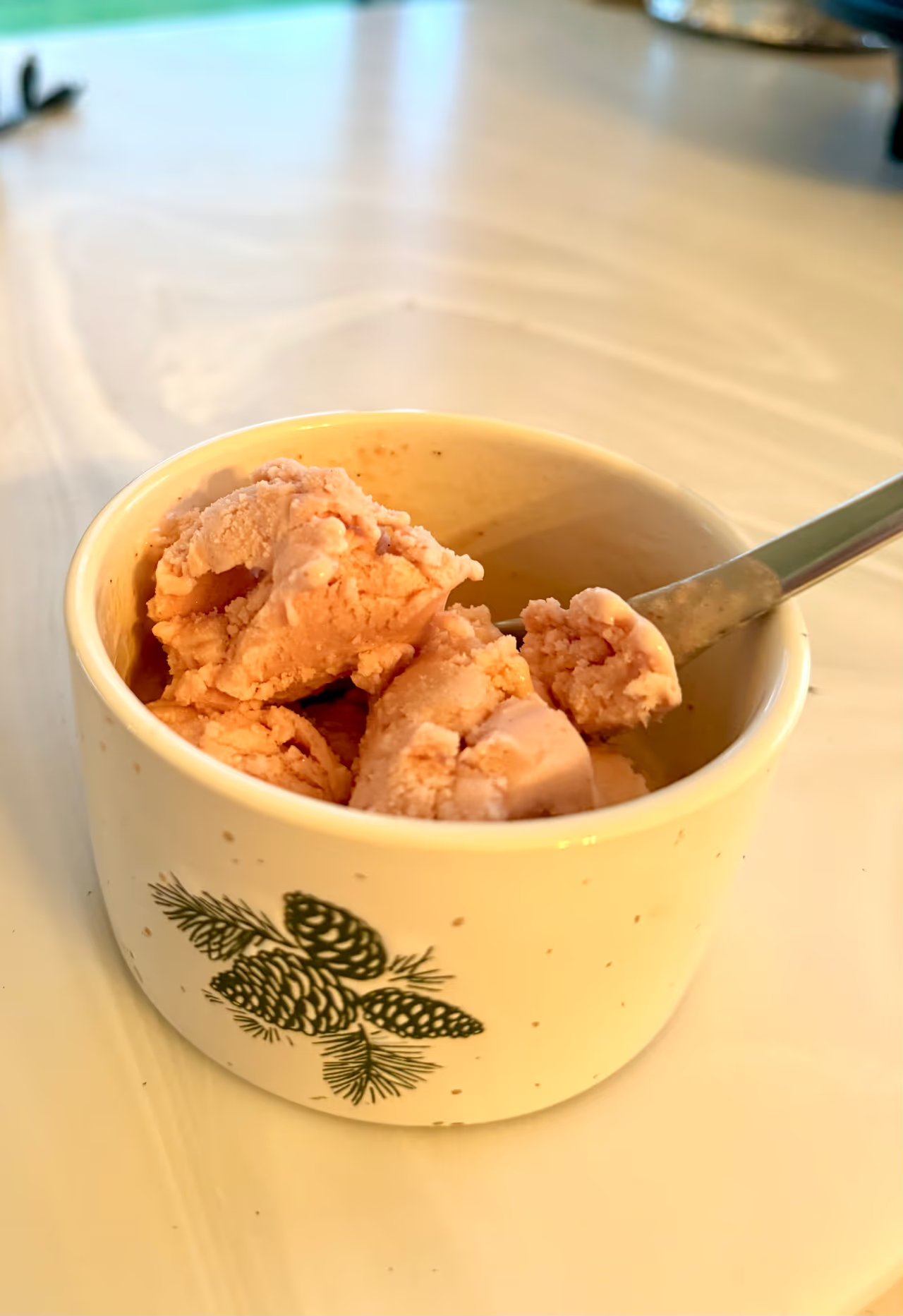
Fast forward: the recipe was adjusted with Gemini’s help. The result turned out successful in that it tasted pretty good, but it was more rich than I wanted! Surprisingly, it turned out remarkably close to Häagen-Dazs ice cream.
Technically, the model did exactly what it was supposed to do based on my ask. It successfully balanced the water ratio of the recipe so the ice cream wouldn't turn into an icicle.
It was only when I actually took a bite that I realized my mistake: the full ask and goal was in my head, and I simply hadn't provided it to the model.
In hindsight, I didn't outline my objective for a light mouth feeling, not too buttery or rich, with a forward strawberry flavor. I just handed over the recipe, flagged the water issue, and let the model make its own assumptions to hit that successful baseline.
On the bright side, the experiment led to a phenomenal mistake. A few small scoops of this rich strawberry ice cream paired with a sour cream glazed donut from Tim Hortons absolutely worked out! Highly recommend.
A Quick Reminder on PTCF
Taking that first bite served as a vivid reminder of why we have to review our prompt before hitting submit. If you remember my previous post on the PTCF framework, I break down the four basic parts needed for an effective prompt: Purpose, Task, Context, and Format.
When we get lazy with our prompts or don’t realize what we have excluded, we usually cover the Purpose and the Task, but may be vague with the Context. Because Purpose and Task are natural to state.
Think of it like this: if you order a chicken sandwich at a restaurant, and tell the server your purpose is hunger and your task is to get a chicken sandwich, they will successfully bring you one.
But if you hate mayo and forgot to mention it, you are potentially going to get a sandwich covered in mayo. The restaurant technically did exactly what you asked, but you didn't get the outcome you actually wanted because the context stayed in your head.
The Direct Line Between Context and Outcomes
Context is the missing detail that directly dictates your final output. When you leave it out, the AI is forced to make a few assumptions to try and solve the problem you presented.
In my case, because I kept the final version of ice cream locked inside my own head instead of adding that crucial context, the model simply focused on the math. It took the exact recipe I provided and adjusted the ratios to handle the extra liquid.
Here is the difference between what was missing vs the outcome:
- The Missing Context: "Frozen berries add extra water. I want a light mouthfeel, not too buttery, with a forward fruit flavor."
- The Actual Outcome: A heavier, richer base because the model balanced the water content using the ingredients it was given.
By skipping that single layer of background detail, the final outcome shifted from a refreshing summer treat to a richer-than-intended dessert.
Progress Over Perfection
Round two of the strawberry ice cream experiment will happen soon! This time, my prompt will have all its context built in right from the start for the outcome I want.
Next time you open up a chat to tackle a project, take ten seconds to review PTCF. See what you need to add in to be successful.
By taking a moment to clearly define the style, constraints, and feeling you want up front, you will protect your final outcomes and save yourself a lot of editing time.
Comments
No comments yet. Be the first to share your thoughts!